Start Here

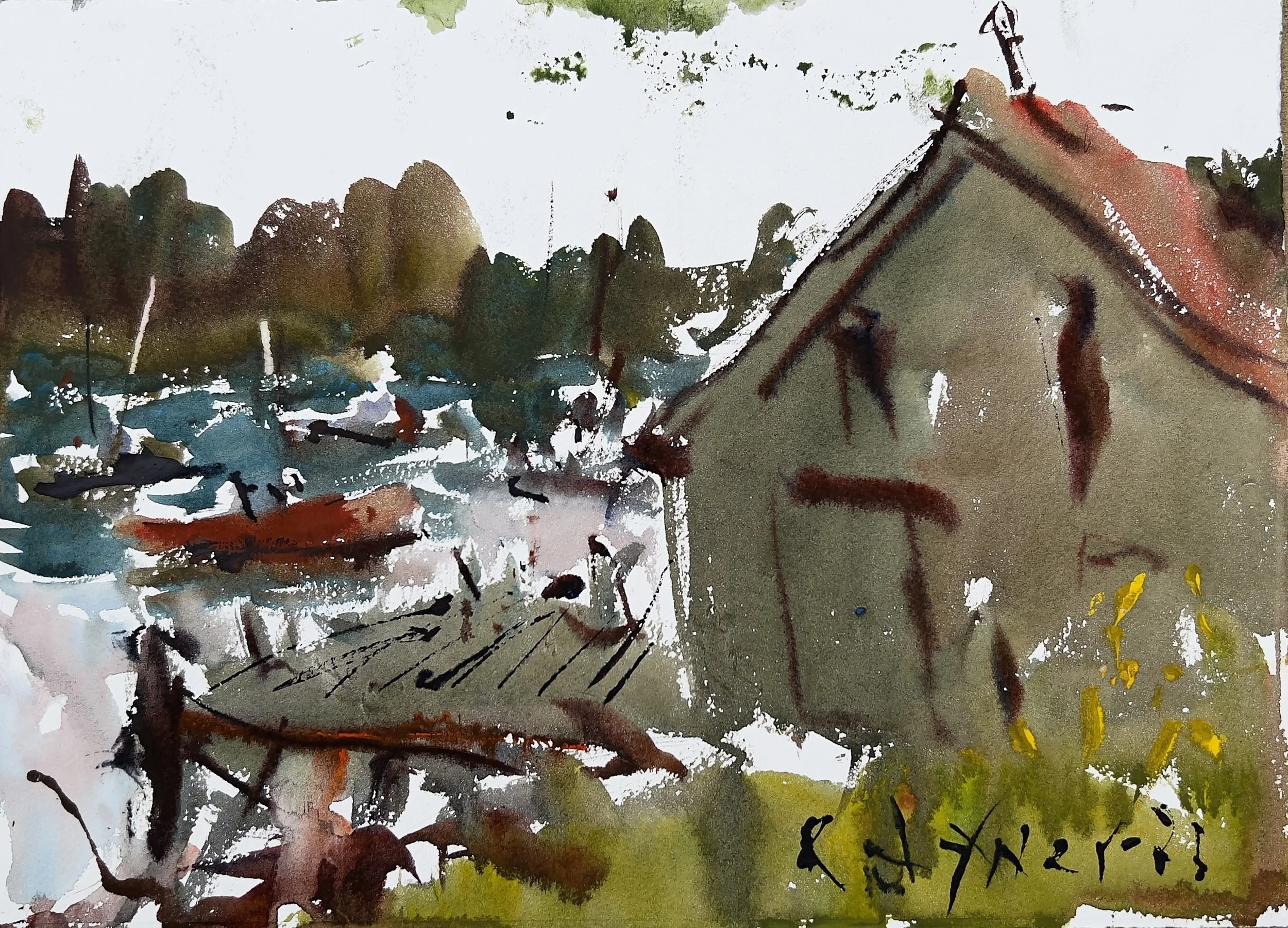
So you want to paint loose? Excellent decision.

You've come to the right place. You're dealing with the self-proclaimed loosest watercolor artist on the planet.

Unfortunately, I'm about to tell you something you probably don't want to hear:

Don't start by trying to paint loose.

Loose isn't random. And it isn't just painting faster, using a bigger brush, or closing one eye — although we'll probably get to that.

The freedom comes from understanding what's underneath the painting first.

Learn the structure. Then start breaking it apart.

NEW HERE?

Start with the #1 Loose Watercolor Tip on the Planet.

If your watercolor feels tight, overworked, or you're trying way too hard to get everything “right,” this is where I'd start.

It's a short, free lesson about the one practice I believe gives you the structure, confidence, and freedom to paint loose.

And the best part?

You don't need fancy brushes, expensive paint, or your precious watercolor paper.

Just a pencil and a piece of paper.

Show Me the #1 Loose Watercolor Tip

Then come back here and we'll keep going.

Where Are You Right Now?

“My drawing and fundamentals need work.”
Start with Drawing Fundamentals. Build the floor first.

“I know the basics, but everything I make feels stiff.”
Start with Deconstruction Lab. You'll learn how to take what you know and start letting go of some of that control.

“I'm comfortable drawing and ready to understand painting better.”
Move into Design & Composition and Value & Color, then bring everything together with watercolor.

The Loose On Purpose Path

1. Drawing Fundamentals

Shapes. Proportion. Perspective. Seeing and simplifying what you're looking at.

If your drawing foundation is already solid, move on.

2. Deconstruction Lab

This is where things start falling apart — on purpose.

Construct → understand → simplify → speed up → deconstruct.

Learn the structure first, then discover how much of it you can leave out.

3. Design & Composition

Before worrying about beautiful washes, figure out where things go and why.

Strong design gives loose marks somewhere to live.

4. Value & Color

Color gets all the attention. Value does most of the work.

Learn to simplify value and color so you're making clearer decisions instead of trying to paint everything you see.

5. Watercolor Progressions

Now we let watercolor be watercolor.

Washes, wet-in-wet, edges, timing, brushwork, simplification, experimentation, mistakes, and learning when to leave the thing alone.

This is where everything comes together.

Why Not Just Jump Straight to Watercolor?

You can.

I'm certainly not calling the watercolor police.

But there's a difference between loose and random.

The stronger your understanding of drawing, design, value, and color, the more freedom you have to simplify, exaggerate, experiment, leave things out, and make mistakes without the whole painting collapsing.

Structure first. Then break it down and let it fall apart.

That's what painting Loose On Purpose is all about.

Ready?

Start wherever you need to start.

Make some paintings. Make some mistakes. Figure out what happened. Then make another one.

View All Courses